Why Your Child Needs a Social Club: Building Friendship, Confidence, and Real-World Skills
By Historical Conquest LLC · October 2, 2026
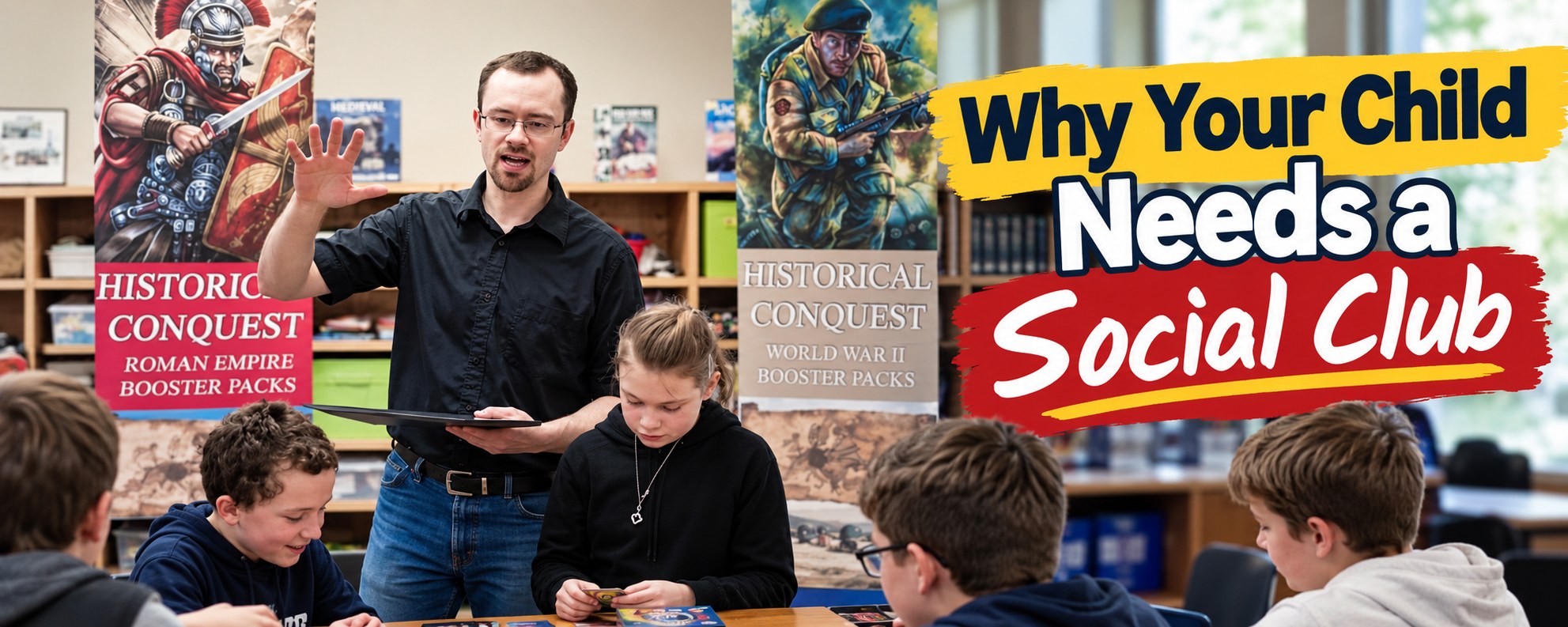
For homeschool families especially, academics are usually the easiest part of education to plan. We can purchase mathematics curriculum, find science experiments, choose great books, study history, and schedule field trips. But there is another part of a child's education that deserves just as much intentional planning: learning how to interact with other people.
Children need opportunities to make friends, join groups, cooperate, compete appropriately, solve disagreements, communicate their ideas, and discover what it feels like to belong. A social club can provide these experiences in a structured environment built around something students already enjoy. It might be a chess club, robotics club, book club, hiking group, science club, tabletop gaming club, art group, service organization, or history gaming club. The activity gets students through the door, but the relationships and skills they develop may become the most valuable part of the experience.
Socialization Is Something Children Practice
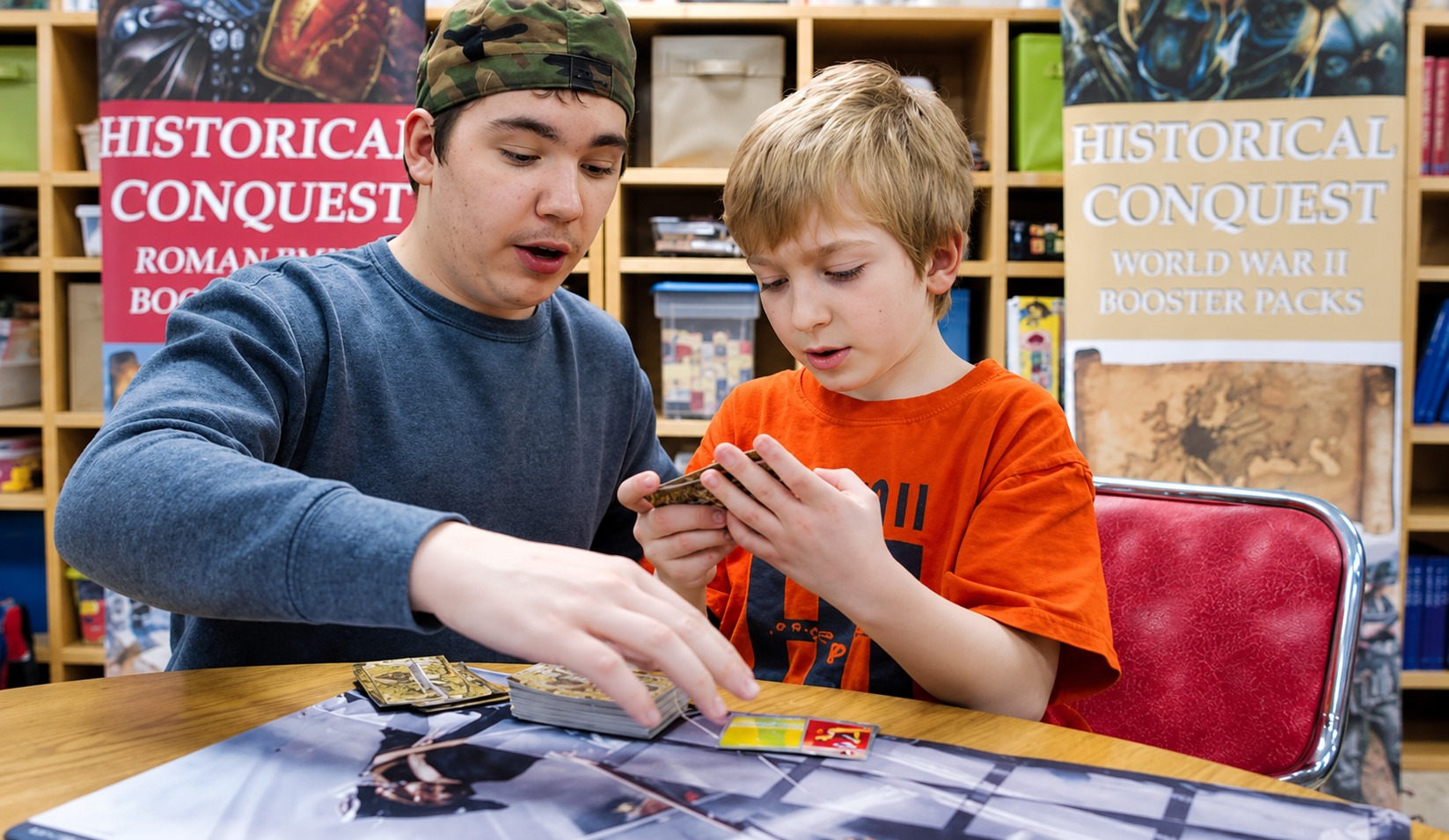
Social skills aren't developed simply by being in the same building with other children. Students develop them through repeated interactions.
Consider what happens during an ordinary game club. One child has to introduce himself to someone new. Another has to explain a rule. Someone loses. Someone wins. Two players disagree about what happened. A shy student has to decide whether to join another table. An experienced player notices a beginner struggling and decides whether to help.
Those moments may appear insignificant, but children are practicing communication, patience, empathy, emotional regulation, leadership, sportsmanship, negotiation, and conflict resolution.
For homeschool families, this deserves particular attention. Homeschooling itself does not mean a child is socially isolated; many homeschool students have rich social lives through co-ops, sports, churches, neighborhoods, volunteering, lessons, clubs, and extended families. The important question isn't where a child attends school. It is whether that individual child has regular opportunities to build meaningful relationships with peers and supportive adults.
The Science of Belonging: Why Relationships Matter
Research in child development gives parents strong reasons to intentionally create opportunities for children to build relationships. Parents are obviously central to that foundation, but growing children also benefit from opportunities to develop healthy relationships beyond the immediate parent-child relationship. The Search Institute, a nonprofit research organization that has studied youth development for decades, describes what it calls "developmental relationships." Its framework identifies five important elements in relationships with young people:
1. Expressing care,
2. Challenging growth,
3. Providing support,
4. Sharing power,
5. Expanding possibilities.
According to the Institute, young people who experience strong developmental relationships across their families, church groups, schools, programs, and communities are more likely to develop resilience and thrive. (Search Institute)
This is one reason clubs, sports, church groups, homeschool co-ops, scouting, service organizations, gaming groups, and other organized activities can be so valuable. They give young people repeated opportunities to interact with peers and trustworthy adults while working toward something together. A 2024 research review described organized activities—including extracurricular programs and youth-development organizations—as important settings in which young people can develop "social capital," meaning networks of supportive relationships that can later help them pursue educational, career, and life goals. (PubMed)
Long-term research also suggests that participation in extracurricular activities is associated with positive educational outcomes. A nationally representative longitudinal study following 11,720 students found that the breadth and intensity of extracurricular involvement in 10th grade were associated with educational attainment eight years after high school. Another longitudinal study found that participati
on in high-school clubs and prosocial activities was associated with later educational status and civic engagement even after researchers accounted for several preexisting differences among students. These studies demonstrate associations rather than proving that joining a club by itself causes later success, but they provide additional evidence that organized activities can become meaningful parts of adolescent development. (PubMed)
For homeschool parents, the takeaway doesn't need to be complicated: children need family, but they also need opportunities to practice being part of a community. A good social club gives them a place to talk with people outside their household, make friends, cooperate, compete appropriately, experience disagreements, solve problems, help younger or less-experienced students, learn from older mentors, and discover that they have something valuable to contribute.
That's much bigger than simply "getting the kids out of the house." It is practice for adulthood.
What Happens When Children Don't Get Enough Connection?
Parents should also understand the other side of the equation.
Occasionally wanting solitude is perfectly normal. A quiet child isn't necessarily lonely, and an introverted student doesn't need to be transformed into an extrovert. Solitude and unwanted social isolation are not the same thing.
The concern arises when children lack satisfying relationships or repeatedly withdraw from opportunities for meaningful interaction.
A recent review of adolescent loneliness notes that peer relationships become increasingly important during adolescence and that supportive, high-quality friendships can protect against loneliness, while rejection, exclusion, and poor-quality relationships can increase vulnerability. PubMed Central (PMC) A systematic review of social isolation likewise found evidence connecting isolation during childhood and adolescence with adverse developmental outcomes, although the evidence varies across studies and circumstances. (PubMed Central (PMC))
There can also be a cycle worth watching for. A student who feels uncomfortable socially may avoid interactions. Avoiding them means fewer opportunities to practice. Less practice can make the next interaction feel harder, which may encourage further withdrawal. Parents don't need to force a shy child into a huge crowd; instead, they can provide small, predictable, interest-based opportunities to connect.
That's one reason clubs can work so well.
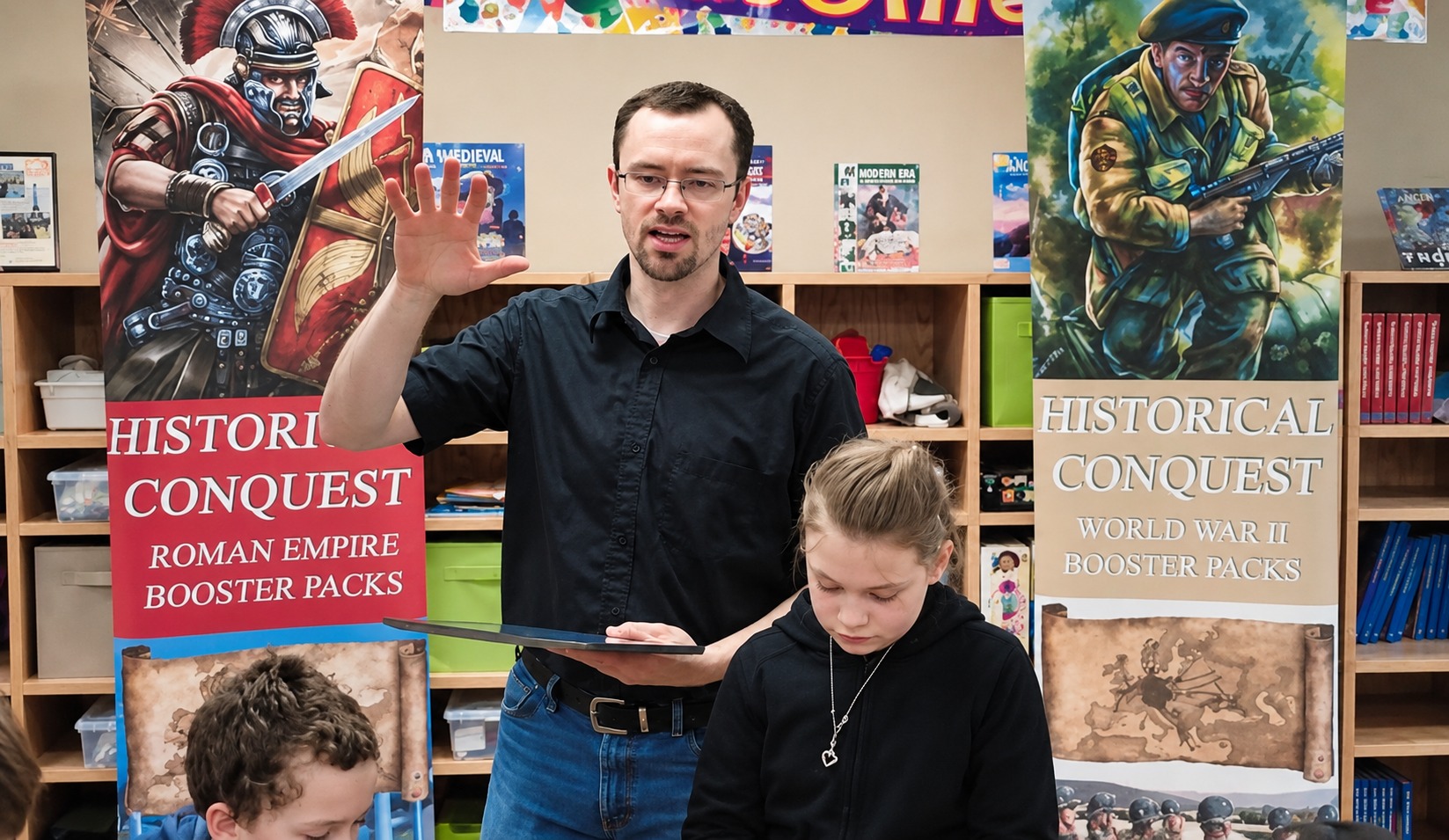
Telling two unfamiliar 13-year-olds, "Go socialize," isn't much of a plan.
Put a chessboard between them, however, and suddenly they have something to discuss.
Give them a cooperative science experiment and they have a problem to solve. Give them paintbrushes and they can create together. Put a strategy game on the table and within minutes they're negotiating, laughing, competing, asking questions, explaining rules, an
d planning their next moves.
The shared interest takes some of the pressure off social interaction.
That's particularly useful for students who are hesitant in unstructured social environments. They don't have to invent a conversation. The activity provides one.
Over time, "Whose turn is it?" can become "What are you doing this weekend?" Eventually, another student isn't merely an opponent or teammate anymore.
They're a friend.
What Children Can Learn in a Good Club
A well-run club should provide much more than entertainment. It can become a small laboratory for growing up. Students have opportunities to practice:
- Communication: explaining ideas, asking questions, listening, and disagreeing respectfully.
- Sportsmanship: winning without boasting and losing without falling apart.
- Leadership: teaching beginners, organizing activities, and accepting responsibility.
- Problem-solving: adapting when plans fail and working through disagreements.
- Confidence: becoming competent at something and contributing to a group.
- Friendship: repeatedly spending time with people who share an interest.
- Independence: interacting with peers without Mom or Dad managing every conversation.
- Empathy: recognizing that other people think, communicate, and react differently.
A club also gives students something powerful: a reason to come back next week.
Consistency matters because friendships usually aren't created by one spectacular afternoon. They're built through repeated ordinary encounters.
Don't Overschedule Them, Either
There is an important balance.
If one club is good, twelve aren't necessarily better.
Research involving 864 adolescents found that moderate participation across extracurricular domains was associated with stronger school belonging and some better academic outcomes compared with either lower or higher involvement. The researchers cautioned against assuming that simply adding more activities always produces greater benefits. PubMed
Children still need family time, sleep, unstructured play, independent interests, and occasionally absolutely nothing scheduled.
The goal isn't to fill every square on the calendar. It's to provide meaningful, consistent connection.
How Parents Can Start a Social Club
You don't need a building, a large budget, or 50 children. Start with four or six.
Choose an interest your child genuinely enjoys: board games, LEGO building, history, robotics, art, books, outdoor exploration, cooking, science experiments, service projects, trading-card games, or chess.
Contact families through your homeschool co-op, church, neighborhood, library, community center, Facebook group, or existing network. Meet somewhere comfortable and public when appropriate—a library meeting room, community center, homeschool co-op, game store, church classroom, or park pavilion.
Keep the first meeting simple. A workable 60–90 minute club could look like this:
- 10 minutes — Welcome: Introductions and something easy that gets everyone talking.
- 15 minutes — Learn: Explain today's game, project, challenge, or theme.
- 45 minutes — Participate: Let students play, build, create, compete, or collaborate.
- 10 minutes — Share: Students talk about what happened, what they learned, or what they want to try next time.
- 10 minutes — Social time: Give friendships room to develop naturally.
Then schedule the next meeting before everyone leaves.
Parents don't need to orchestrate every interaction. Establish clear expectations for kindness, safety, inclusion, and sportsmanship, and then give students enough freedom to build relationships themselves.
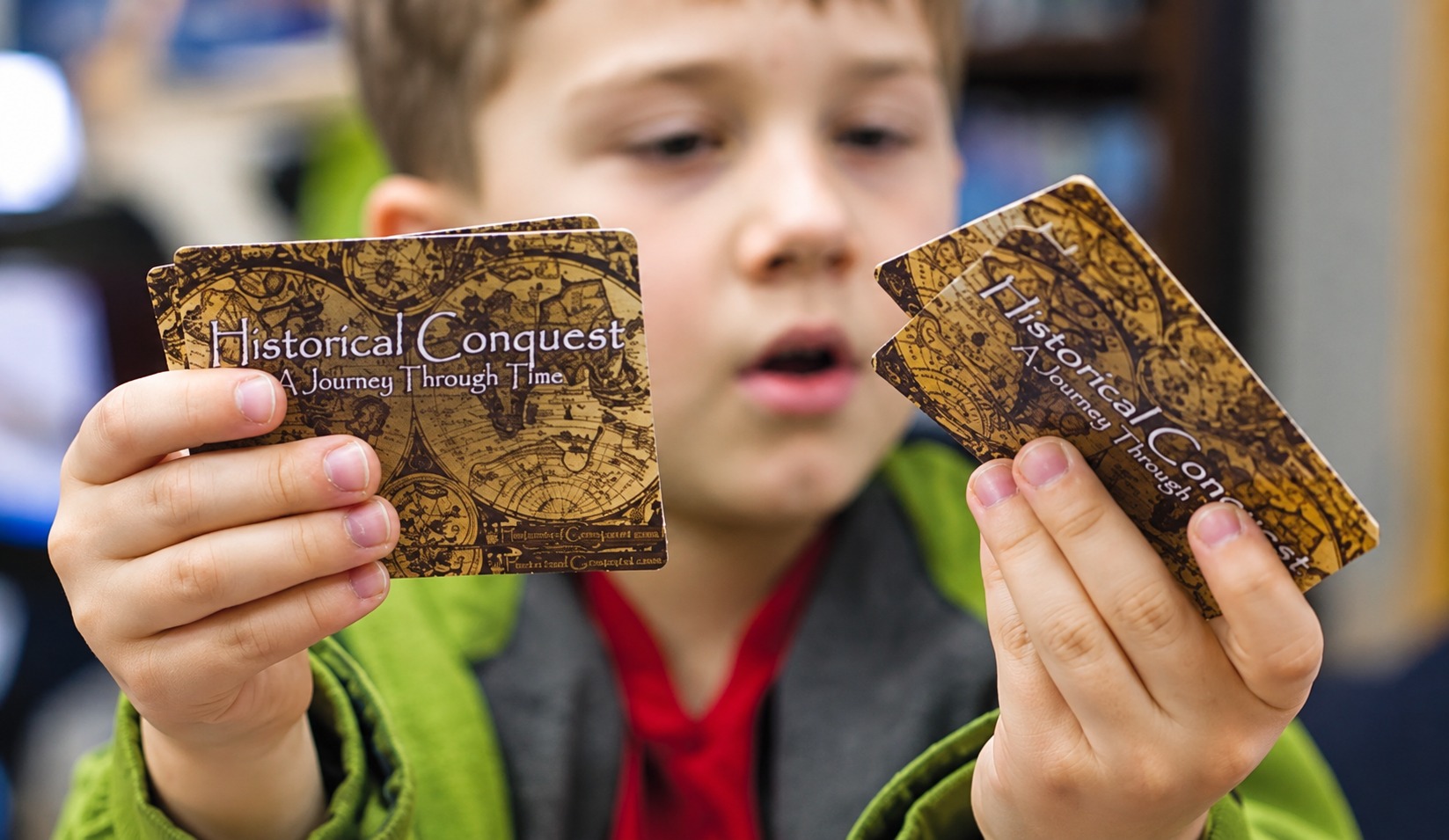
Using Historical Conquest to Start a History and Gaming Club
For families who enjoy history and strategy games, Historical Conquest provides one ready-made way to build a club around a shared activity. The physical card game can give students something immediate to do together while history provides an almost unlimited supply of conversation, tournaments, challenges, and learning opportunities.
Historical Conquest's current Ambassador Program is specifically designed to help people establish local gatherings and tournaments. According to the program's website, more than 61 Ambassadors are hosting tournaments in 21 states or are in the process of starting them. Ambassadors are expected to hold monthly tournaments and report attendance and winners.
The program currently provides several tools for organizers. Historical Conquest says participating players can receive monthly rare cards, tournament winners can receive prizes, and players can participate in a points/bracketing system. New organizers can also purchase a "Tournament in a Box," currently described as containing 12 Starter Decks and 18 Expansion Packs. The company also offers Ambassador merchandise discounts and other incentives; prices and program terms can change, so prospective hosts should verify the current details before joining.
The game doesn't need to be the entire club, either. A parent could create a History & Strategy Club where students spend part of the meeting playing Historical Conquest and another part discussing historical characters, conducting mini-debates, bringing interesting historical facts, or challenging one another in tournaments.
And that's ultimately the bigger idea. The cards get placed on the table. The children come to play. But the real victory may be what happens around the table.
A shy student learns someone's name. A new player gets invited into a game. An older student teaches a younger one. Someone learns to lose graciously. Another discovers leadership. Two children who might never have spoken discover that they love the same subject.
Eventually, parents may hear the question that tells them the club is working:
"When are we meeting again?"
That's not merely a successful activity. That's community beginning to form.
Start a Historical Conquest club or tournament through the Ambassador Program