Learning History Beyond the Textbook: Helping Students Connect, Remember, and Grow
By Historical Conquest LLC · July 21, 2026 · History, Curriculum, Reading
History Was Never Meant to Be Boring
Ask many adults what they remember about history class, and you'll often hear the same answer: dates, vocabulary words, and long lectures. Unfortunately, many students leave history believing it is simply the memorization of names, battles, and timelines. They study for a test, pass it, and then forget most of what they learned only a few weeks later.
But history was never intended to be experienced that way.
History is the story of humanity. It is the story of explorers risking everything to discover new lands, inventors changing the world with bold ideas, families struggling through difficult times, soldiers displaying courage under impossible circumstances, leaders making decisions that shaped nations, and ordinary people whose choices influenced generations to come.
Seeing it from the perspective of the people and their stories, instead of a birds eye view of something that is only worth memorizing for a test and forgotten the next day.
When students encounter history as a collection of stories rather than a collection of facts, something remarkable happens—they begin to care.
Students Remember What They Feel
One of the greatest keys to long-term learning is emotional connection. Think back to your own life. You probably remember moments that made you laugh, surprised you, challenged you, frightened you, or inspired you far more clearly than in ordinary days. Emotion tells the brain, "This matters. Remember this." The same principle applies in education.
When students simply memorize the date of the Boston Tea Party, they may forget it after the next test.
But when they imagine what it felt like to stand on a cold December night disguised as a Mohawk, quietly climbing aboard a British ship while wondering if they would be arrested for dumping tea into the harbor, history suddenly becomes personal. Emotion creates memories. Stories create emotion. And memories lead to lasting learning.
Understanding People Is More Important Than Memorizing Facts
History is not really about dates. It is about people.
Students benefit far more from understanding why Abraham Lincoln struggled with difficult decisions than simply memorizing when he became president.
They learn more by understanding why immigrants risked everything to come to America than by memorizing the year they arrived.
They gain wisdom by asking why civilizations rose and fell, why wars began, why peace was achieved, and how ordinary people overcame extraordinary challenges.
Dates certainly have their place. Vocabulary helps students communicate accurately. Names are important. But these facts become meaningful only when connected to the larger human story.
When students understand the people, the facts naturally become easier to remember.
Learning Doesn't Always Look Like a Lecture
One of the greatest misconceptions about education is that learning only happens while someone is standing in front of a classroom explaining information. In reality, some of the deepest learning happens through experiences.
· A family visiting a historic battlefield.
· A student acting out a famous speech.
· Building a medieval castle from cardboard.
· Cooking recipes from another culture.
· Creating maps by hand.
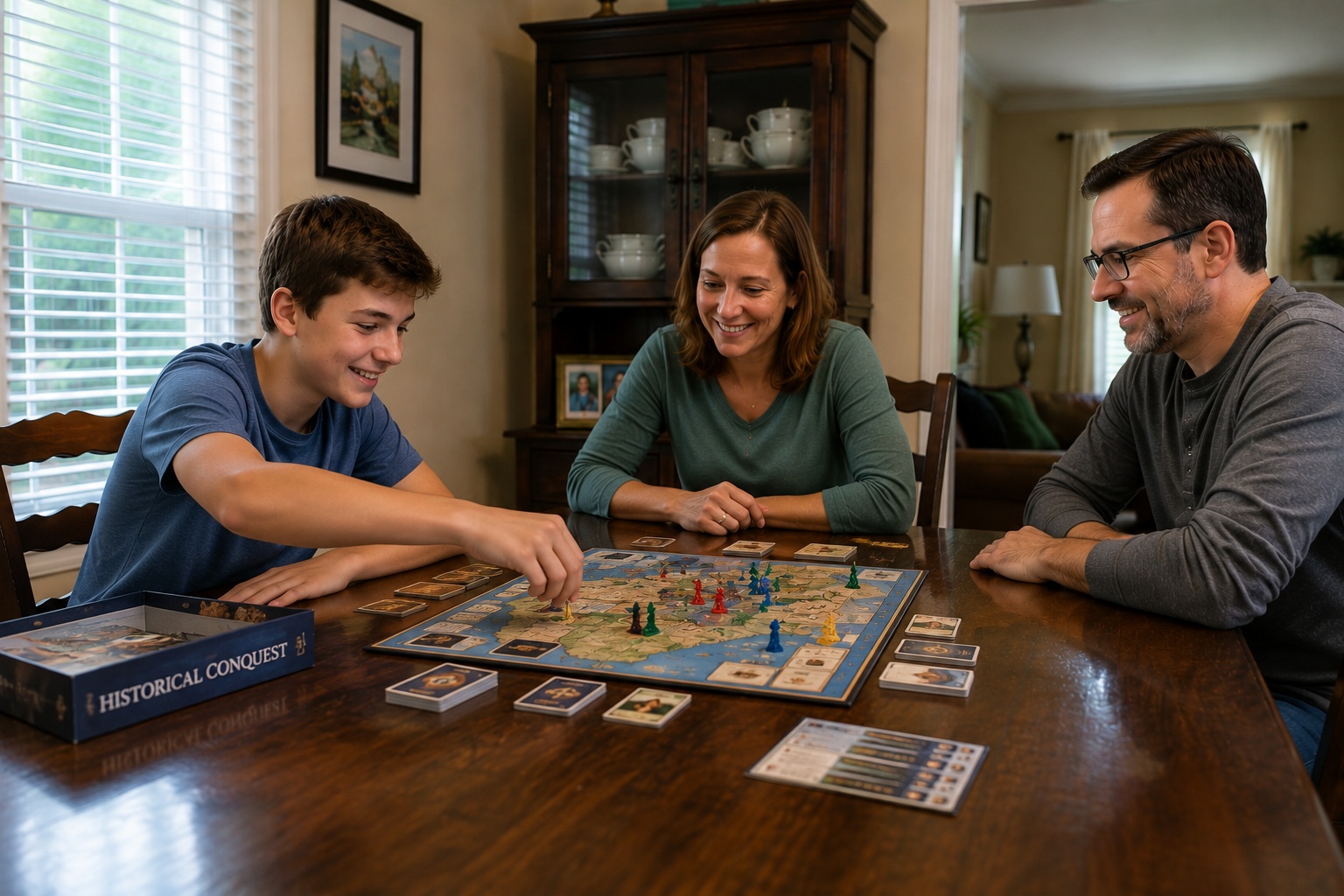
· Playing a strategy game based on ancient civilizations.
· Writing letters as though they lived during the American Revolution.
· Interviewing grandparents about historical events they experienced.
None of these activities may resemble a traditional lecture, yet each one helps students develop a richer understanding of history. Sometimes the lesson isn't directly teaching historical facts. Instead, it creates curiosity. And curiosity often becomes the doorway to lifelong learning.
Active Learning Creates Stronger Memories
Educational research consistently points toward the value of active learning. Students generally remember more when they participate than when they simply observe.
When learners discuss ideas, solve problems, build projects, role-play historical events, or teach others, they become active participants rather than passive listeners.
This active engagement strengthens understanding because students must think, analyze, communicate, and apply what they have learned.
History becomes something they experience instead of something they simply read. The goal is not merely to finish a chapter. The goal is to help students think like historians.
Alternative Learning Methods Reach Different Students
Every child learns differently. Some students thrive by reading biographies. Others learn best through conversations. Some need to build, draw, move, explore, or create. And others retain information through games, simulations, or hands-on projects.
This is one reason alternative approaches to learning are so valuable. They give more students an opportunity to succeed. A child who struggles to remember vocabulary lists may suddenly become fascinated after visiting a museum. A reluctant reader may develop a love for history after playing an educational strategy game. A student who dislikes lectures may become captivated by historical storytelling or dramatic reenactments.
Alternative learning methods are not replacing education. They are expanding it.
History Is Everywhere
Social studies becomes even more meaningful when students recognize it in everyday life.
· The roads they travel.
· The government that serves their community.
· The elections they hear about.
· The businesses in their town.
· The monuments they visit.
· The traditions their families celebrate.
· The languages they hear.
· The architecture they admire.
· The local museums, parks, churches, and neighborhoods all tell stories shaped by history.
Helping students recognize these connections transforms history from an academic subject into something living and relevant.
Students begin asking better questions because they realize history is not confined to a textbook. It surrounds them every day.
Games, Stories, and Experiences Build Lasting Knowledge
Many parents worry that if children are having fun, they cannot possibly be learning enough.
The opposite is often true.
When students enjoy learning, they willingly spend more time with the material. They ask more questions. They investigate more deeply. They seek additional resources on their own:
Games encourage problem-solving.
Stories create emotional investment.
Hands-on activities strengthen understanding.
Creative projects build ownership.
Together, these methods help students remember information long after traditional memorization would have faded.
Fun is not the opposite of learning. Meaningful engagement is often one of learning's greatest partners.
Teach Understanding Before Memorization
Rather than asking students to memorize twenty vocabulary words before they understand the topic, consider reversing the process.
1. Begin with the story.
2. Introduce the people.
3. Explore the challenges.
4. Discuss the decisions.
5. Ask questions.
6. Create activities.
7. Encourage exploration.
8. Then introduce the vocabulary, dates, and names within that larger context.
Students often remember the facts much more naturally because they now have a story to attach them to. Facts connected to understanding become knowledge. Facts without understanding often become forgotten information.
Helping Students Discover Their Best Way to Learn
One of the greatest gifts parents and educators can give children is helping them discover how they learn best.
· Some students flourish through books.
· Others through discussion.
· Others through games.
· Others through projects.
Still others through teaching what they have learned to siblings or classmates. Instead of forcing every student into the same educational mold, we should seek to understand how each learner thinks, processes information, and becomes excited about discovering something new. When we identify those strengths, we can map lessons in ways that make learning more meaningful and far more effective.
Building Lifelong Learners
Our ultimate goal is not simply helping students pass history tests. It is helping them become curious, thoughtful, informed adults who continue learning throughout their lives.
· History teaches wisdom.
· Social studies teaches citizenship.
· Stories teach empathy.
· Activities teach problem-solving.
· Games teach strategy.
· Discussions teach communication.
Together, these approaches help students build knowledge that lasts far beyond graduation. Whether you are homeschooling around the kitchen table or teaching in a classroom filled with students, remember that history is far more than a timeline of events. It is the story of people, ideas, courage, mistakes, discoveries, and hope. When we help students connect emotionally with those stories and actively participate in the learning process, history comes alive. And when history comes alive, students do more than remember the past—they gain wisdom that helps them understand the present and prepare for the future.