13. Heroes and Villains of the Roaring 20's: The Stock Market Boom
By Historical Conquest LLC · June 11, 2026

My Name is Charles E. Mitchell: Banker and Champion of the Stock Market Boom
I became one of the most powerful bankers in the United States during the Roaring Twenties. I was born in 1877 in Illinois and grew up during a time when America was transforming from a nation of farms and small towns into a land of giant industries, railroads, and corporations. As a young man, I admired business leaders who built great enterprises and believed that prosperity came from opportunity, hard work, and investment. Those beliefs would guide my entire career.
Rising Through the Banking World
After studying and beginning my career in finance, I joined the National City Bank of New York, one of the largest banks in the nation. I worked my way upward through determination and a willingness to embrace new ideas. Banking was changing rapidly, and I believed financial institutions should help ordinary people participate in the growing economy. Eventually, I became the bank's chairman and one of the most influential figures on Wall Street.
Bringing Investing to the Public
During the 1920s, I strongly encouraged Americans to invest in stocks. Many people had traditionally placed their money in savings accounts, but I believed that investing offered greater opportunities. To me, the stock market represented progress and prosperity. I did not see investing as something only for the wealthy. I wanted factory workers, office clerks, shopkeepers, and professionals to share in America's economic growth by becoming stockholders.
My Faith in Economic Growth
The economy seemed unstoppable. New automobiles filled the roads, radios connected families across the nation, and businesses reported record profits. I believed America had entered a new era of prosperity unlike anything seen before. When critics warned that stock prices were rising too quickly, I often dismissed their concerns. From my perspective, they simply failed to understand the strength of modern American business and finance.
The Controversies Around My Ideas
Many people criticized my support for easy credit and stock market investing. Some worried that investors were borrowing too much money through buying on margin. Others believed banks were becoming too involved in stock speculation. I often found these criticisms frustrating. I genuinely believed that expanding access to investment opportunities was helping Americans build wealth. I could not understand why so many people viewed these developments as dangerous rather than beneficial.
The Crash and Public Anger
When the stock market crashed in 1929, much of the public anger turned toward Wall Street and banking leaders like me. Investigations examined the actions of major banks and financial institutions. Practices that had seemed normal during the boom years suddenly appeared reckless to many Americans. The confidence that had fueled the decade disappeared almost overnight, replaced by fear and uncertainty.
Looking Back
As the years passed, I came to understand that confidence alone could not guarantee prosperity. While I still believed that investing and economic growth created tremendous opportunities, I eventually recognized that speculation, excessive borrowing, and weak safeguards had contributed to serious problems. Looking back, I wish I had listened more carefully to some of the warnings that were being offered. The lessons of the 1920s taught me that optimism is valuable, but it must always be balanced with caution.
America Enters the Age of Prosperity - Told by Charles E. Mitchell
When the guns of World War I finally fell silent in 1918, the United States stood in a position unlike any nation on Earth. Much of Europe had suffered devastating destruction, but America's factories, railroads, banks, and businesses remained intact. During the war, American industries had expanded rapidly to supply both soldiers and allies overseas. As peace returned, many of those factories shifted their attention to producing goods for ordinary citizens. It felt as if an entirely new age of opportunity was beginning.
The Rise of the Consumer Economy
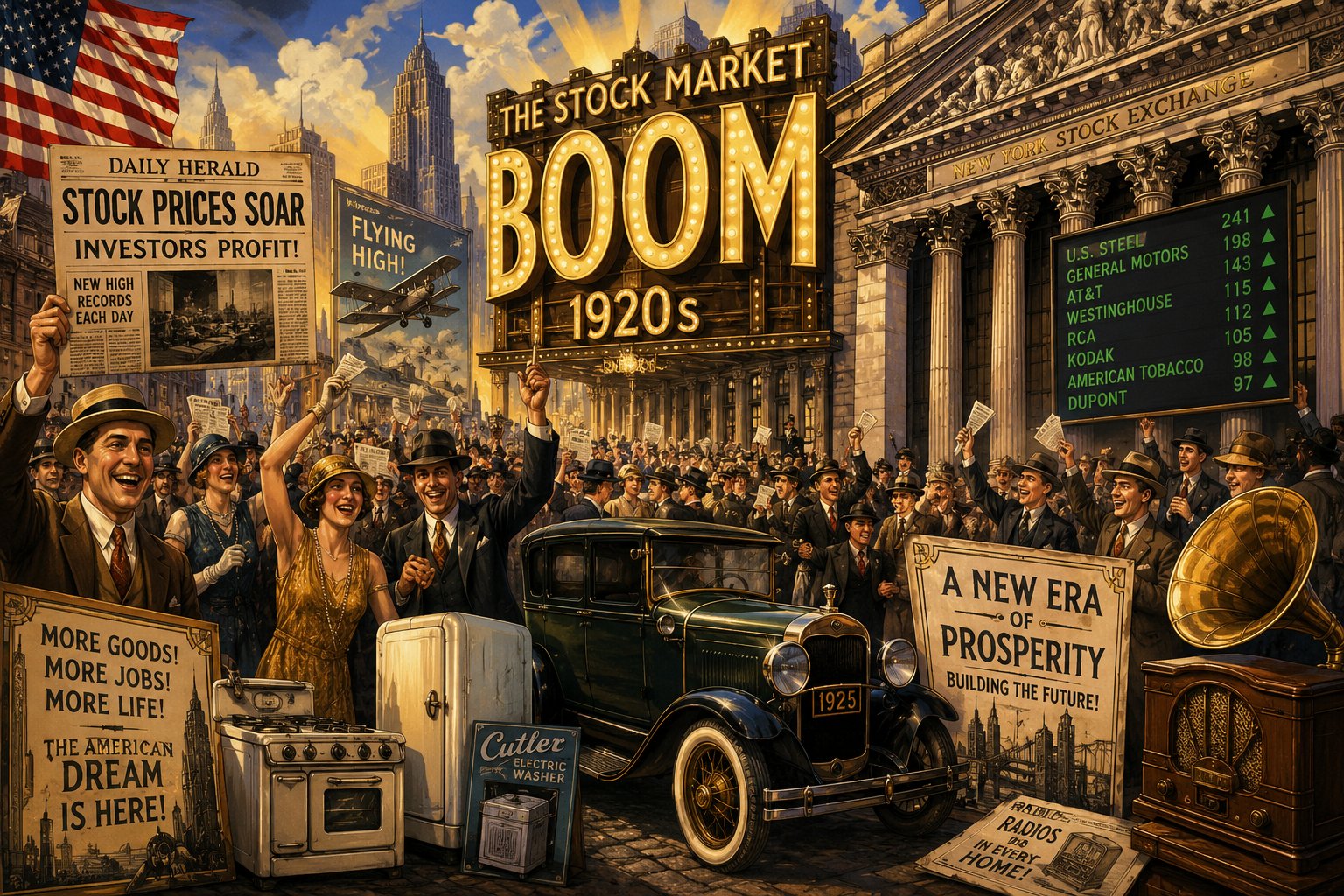
During the early 1920s, Americans discovered products that previous generations could scarcely imagine. Automobiles rolled off assembly lines in record numbers. Radios brought news and entertainment into homes. Electric refrigerators, vacuum cleaners, washing machines, and other inventions transformed daily life. Businesses grew larger and more efficient, producing goods faster and cheaper than ever before. As new products became available, millions of families eagerly opened their wallets to participate in this modern way of living.
Higher Wages and New Opportunities
For many Americans, incomes rose throughout the decade. Factory workers, office employees, salespeople, and professionals often earned more money than their parents had. Unemployment remained relatively low for much of the decade, and businesses continued hiring. Many families who had once struggled simply to meet basic needs now found themselves with extra money to save, spend, or invest. This growing prosperity created a widespread belief that the future would be even brighter than the present.
Business Becomes America's Hero
As a banker, I watched public attitudes change dramatically. In earlier generations, politicians and military leaders often commanded the nation's attention. During the 1920s, however, successful business leaders became some of America's most admired figures. Newspapers celebrated industrialists, bankers, and entrepreneurs who built large companies and created wealth. Many Americans came to believe that business expansion was the key to national progress and personal success.
Confidence Fuels Investing
With businesses reporting strong profits and stock prices rising year after year, more Americans began paying attention to Wall Street. What had once seemed like a place for wealthy financiers increasingly attracted teachers, shop owners, factory workers, and farmers. Many people believed that purchasing stocks allowed them to share directly in America's economic success. As confidence grew, investing became a topic of conversation at dinner tables, workplaces, and social gatherings across the nation.
The Feeling That Prosperity Would Never End
Perhaps the most remarkable feature of the decade was optimism. Americans had witnessed rapid technological advances, expanding businesses, and rising standards of living. Each year seemed to bring new inventions and greater prosperity. Many people genuinely believed that economic downturns belonged to the past and that modern industry had created a future of endless growth. That confidence became one of the most powerful forces driving the Roaring Twenties and setting the stage for the extraordinary stock market boom that followed.
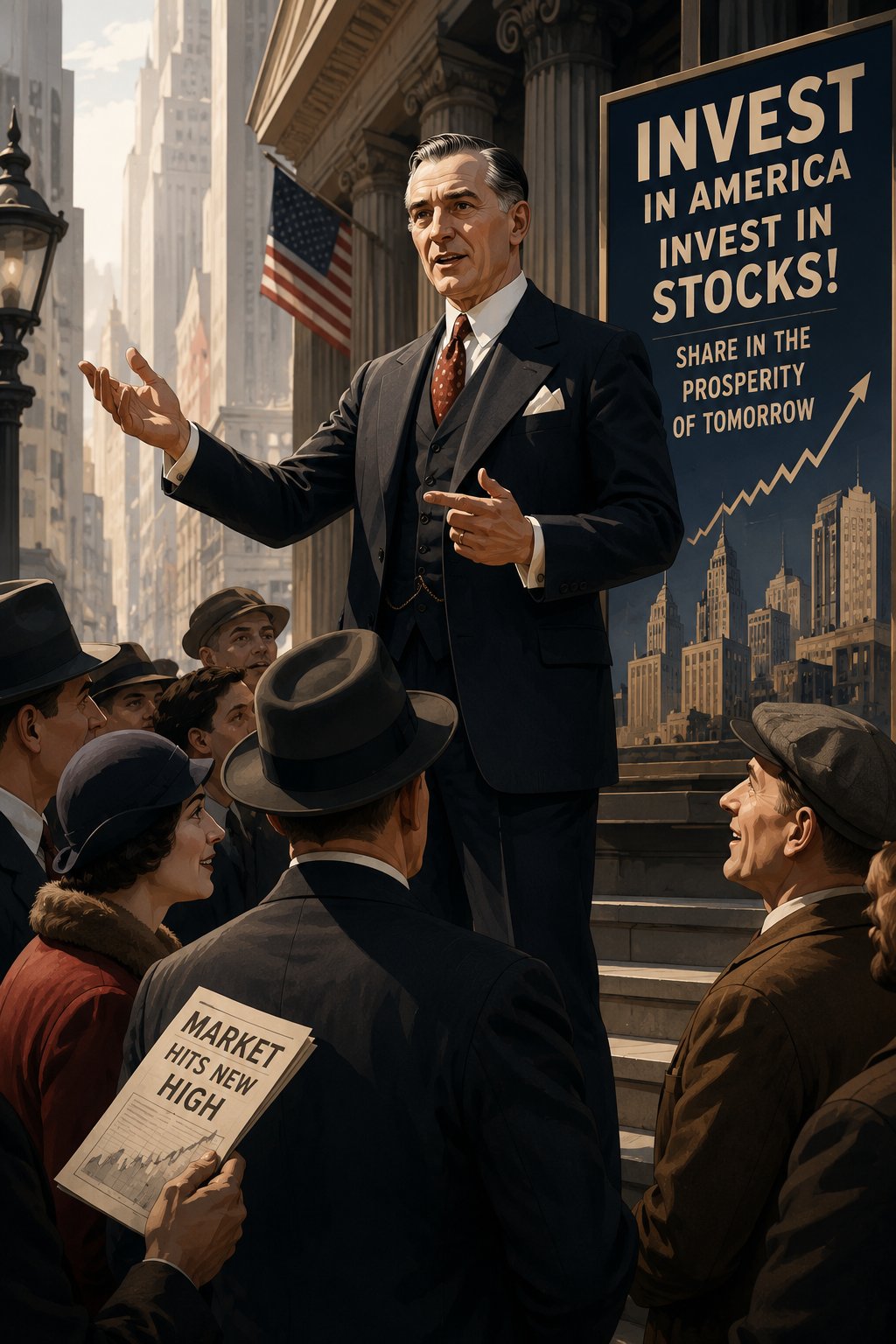
My Name is John J. Raskob: Business Executive and Advocate for Investing
I spent my life helping build some of America's largest businesses while encouraging ordinary people to invest in their future. I was born in Maryland in 1879 to a hardworking family. We were not wealthy, and I learned early that success required discipline, determination, and a willingness to seize opportunities. As a young man, I developed a talent for numbers and organization, skills that would open doors I could scarcely imagine.
Building an Empire with General Motors
My career changed when I began working for the DuPont family. Through hard work and careful management, I rose through the ranks and became one of their trusted executives. Eventually, I played an important role in the growth of General Motors, helping transform it into one of the largest automobile companies in the world. The automobile industry was booming, and I saw firsthand how American innovation and business could create enormous wealth and opportunity.
The Power of Investing
As the economy expanded during the 1920s, I became convinced that stock ownership was one of the greatest paths to financial success. I believed that ordinary Americans should not simply save their money but should put it to work through investments. In 1929, I famously argued that if people invested regularly over time, many could become wealthy. To me, this seemed like common sense. Why leave money sitting idle when America's greatest companies were growing year after year?
Why Didn't People Agree?
Not everyone shared my enthusiasm. Critics warned that too many people were becoming obsessed with stocks and were taking risks they did not fully understand. Some argued that speculation was replacing sound investing. I often struggled to understand their concerns. From my perspective, the American economy was stronger than ever. Factories were producing goods, businesses were expanding, and millions of families were enjoying a higher standard of living. It seemed natural that stock prices would continue rising alongside that prosperity.
Politics and Controversy
I was not only involved in business. I also became active in politics and played a significant role in national campaigns. My strong opinions and public statements often attracted criticism. Some people viewed business leaders like me as symbols of excessive wealth and influence. Others believed that large corporations held too much power. I disagreed with those views and felt that successful businesses were helping create jobs, products, and opportunities that benefited the entire nation.
The Market Turns
Then came the stock market crash of 1929. The confidence that had driven the decade vanished with shocking speed. Businesses struggled, banks failed, and millions of Americans faced hardship. Many of the ideas that had seemed so obvious during the boom years suddenly came under attack. People questioned whether leaders like me had been too optimistic about the future and too trusting of endless economic growth.
Looking Back at the Lessons
Even after the crash, I continued to believe in the value of investing and free enterprise. Yet with time, I came to understand that optimism can sometimes blind people to dangers developing beneath the surface. While I still believed that investing could help ordinary Americans build wealth, I eventually recognized that speculation, debt, and unrealistic expectations had created risks many of us failed to appreciate. Looking back, I learned that confidence is important, but wisdom requires understanding both opportunity and danger.
Saving Money versus Investing Money - Told by John J. Raskob
For generations, Americans believed the safest path to financial security was saving money in a bank account. Parents taught their children to set aside part of every paycheck, protect it from loss, and allow it to grow slowly through interest. Savings accounts provided stability and peace of mind. The goal was not to become wealthy overnight but to prepare for emergencies, retirement, or future opportunities. This approach had served many families well throughout the late nineteenth and early twentieth centuries.
A New Economic Era
By the 1920s, however, America looked very different than it had a generation earlier. Factories produced goods in enormous quantities, businesses expanded across the nation, and new technologies transformed daily life. Large corporations such as automobile manufacturers, utility companies, and consumer product firms appeared to grow stronger every year. As profits increased, many Americans began wondering whether simply saving money was enough to take advantage of this new age of prosperity.
The Appeal of Stock Ownership
Investing offered something that savings accounts could not. When individuals purchased stock, they became partial owners of a company. If that company grew and earned larger profits, the value of its stock often increased as well. Investors could also receive dividends, which were payments made from company earnings. During the Roaring Twenties, many people watched neighbors, friends, and coworkers earn money through investments and became eager to participate themselves.
Why Stocks Seemed So Attractive
Traditional savings accounts generally paid modest interest rates, often only a few percent each year. By contrast, many stocks appeared to increase in value much faster. Newspapers regularly reported record stock prices and growing corporate profits. Stories spread about ordinary Americans who had invested wisely and greatly increased their wealth. To many citizens, investing seemed like a logical way to benefit from the nation's economic expansion rather than merely watching it happen from the sidelines.
Wall Street Comes to Main Street
As the decade progressed, stock ownership expanded far beyond wealthy investors. Brokerage offices opened in cities and towns across the country. Financial news became common in newspapers and on the radio. Teachers, shopkeepers, office workers, and factory employees increasingly discussed stocks alongside sports, politics, and local events. Investing was no longer viewed as an activity reserved for bankers and industrialists. It was becoming part of everyday American life.
The Growing Debate
Not everyone approved of this shift. Some economists, bankers, and public officials warned that many people were moving money into stocks without fully understanding the risks. They argued that savings accounts provided security, while stock prices could rise and fall unexpectedly. Supporters of investing responded that America's economy was stronger than ever and that stock ownership allowed ordinary citizens to share in national prosperity. The debate between safety and opportunity became one of the defining financial discussions of the decade.
A Decision That Shaped the Decade
The movement from saving to investing helped fuel one of the greatest stock market booms in American history. Millions of Americans chose to place their faith in growing businesses and rising stock prices rather than traditional bank accounts alone. Their decisions reflected the optimism, confidence, and belief in progress that characterized the Roaring Twenties. Understanding why Americans made this choice helps explain how the stock market became such an important part of the nation's economy—and why the events that followed would have such far-reaching consequences.
The Growth of Wall Street - Told by Charles E. Mitchell
When most Americans hear the name Wall Street today, they think of money, stocks, and finance. Yet Wall Street began as a small section of lower Manhattan in New York City. Over time, it became home to banks, brokerage firms, insurance companies, and the famous New York Stock Exchange. By the 1920s, decisions made on a few crowded blocks of city streets could influence businesses, jobs, and investments across the entire nation.
America's Financial Capital
Following World War I, the United States emerged as one of the world's strongest economic powers. New York increasingly replaced many European cities as a center of international finance. Companies seeking money to expand often turned to Wall Street for investors. Railroads, automobile manufacturers, utility companies, and countless other businesses raised enormous amounts of capital through stocks and bonds traded there. Wall Street became the place where growing businesses met people willing to invest in their future.
The New York Stock Exchange
At the heart of Wall Street stood the New York Stock Exchange. Every trading day, brokers bought and sold shares of companies on behalf of investors. Prices changed constantly as people reacted to business news, profits, inventions, and economic trends. Newspapers published stock prices daily, allowing Americans from coast to coast to follow developments. The exchange became a symbol of the nation's growing prosperity and economic confidence.
Technology Connects the Nation
One reason Wall Street's influence expanded so rapidly was technology. Telegraph lines, telephones, and ticker tape machines allowed stock information to travel across the country in minutes rather than days. Brokerage offices appeared in cities large and small, giving investors access to markets that had once seemed distant and exclusive. A teacher in Iowa, a merchant in Texas, or a factory worker in Ohio could follow stock prices almost as easily as a banker in New York.
Ordinary Americans Join In
During the Roaring Twenties, Wall Street was no longer viewed as a place reserved only for wealthy financiers. Rising incomes and growing confidence encouraged millions of Americans to become investors. People opened brokerage accounts, purchased stocks, and followed market news with great interest. Families discussed investments around dinner tables, and conversations about stock prices became common throughout the country. The stock market had become part of everyday life.
The Power of Confidence
Much of Wall Street's growth depended on confidence. Investors believed businesses would continue expanding and that the American economy would remain strong. As stock prices rose, even more people wanted to participate. Success attracted additional investors, creating a cycle of optimism that helped fuel one of the greatest financial booms in American history. To many people, Wall Street seemed to offer a path toward financial independence and prosperity.
The Center of a New Financial Age
By the late 1920s, Wall Street had become the unquestioned financial center of the United States. It connected businesses seeking investment with citizens hoping to build wealth. Through new technology, expanding markets, and growing public participation, it reached into nearly every corner of American life. Its rise reflected the confidence, ambition, and optimism of the Roaring Twenties and helped shape one of the most remarkable economic periods in the nation's history.
Understanding Stocks and Ownership - Told by John J. Raskob
Many Americans in the 1920s heard the word "stock" but did not fully understand what it meant. A stock represented partial ownership in a company. When someone purchased shares of stock, they were buying a small piece of that business. Whether the company manufactured automobiles, operated railroads, produced electricity, or sold household products, stockholders became owners alongside thousands of other investors. The success of the company could directly benefit those who owned its shares.
Why Companies Sold Stock
Growing businesses often needed money to expand. They might want to build new factories, purchase equipment, hire workers, or develop new products. Rather than borrowing all of the money from banks, companies could sell shares of ownership to investors. In return for providing capital, stockholders gained the opportunity to share in the company's future success. This arrangement helped many American businesses grow rapidly during the Roaring Twenties.
Read more at: https://www.historicalconquest.com/single-post/13-heroes-and-villains-of-the-roaring-20-s-the-stock-market-boom